Brand & Identity — Q Design Studio
Your brand is polished. But clients still can’t explain what you do. That’s a systems problem.
QDS builds identity systems for established businesses that have a visual presence but not a strategic one — where the brand looks professional but doesn’t communicate, differentiate, or function as a business tool. The output is a brand that works, not one that’s admired.
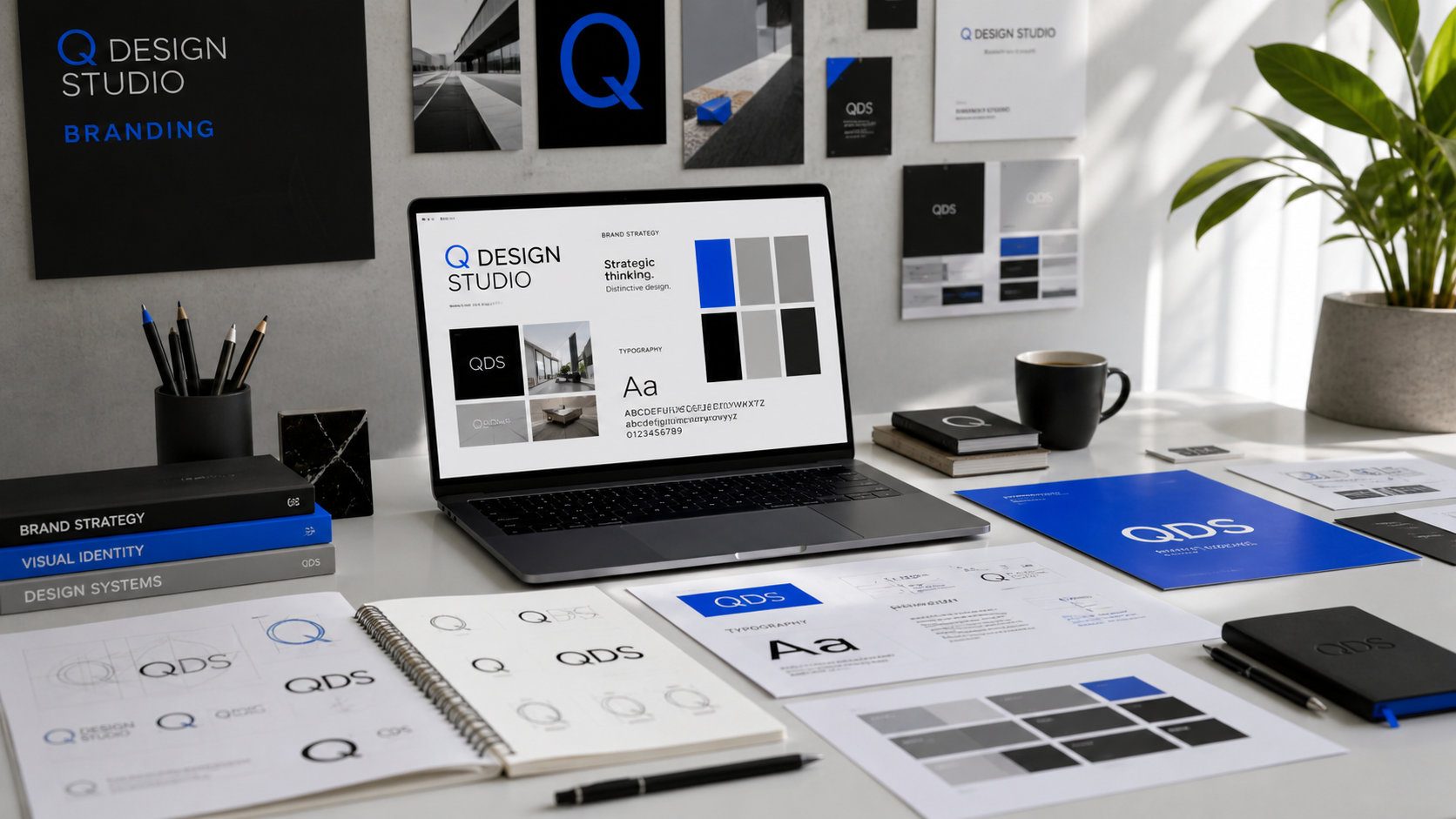
This service is the right entry point if:
Your current logo or visual identity was built early and hasn’t kept pace with where the business is now. The brand signals where you were, not where you’re going.
You’ve had a rebrand before and left with a brand guide that nobody uses. The PDF exists. The application doesn’t.
Clients describe what you do differently than you do. The market hasn’t received the positioning you intended, and the brand isn’t helping clarify it.
You’re entering a new market, launching a new offer, or going upmarket — and the current brand signals the wrong level.
This is probably not the right fit if you’re looking for a logo refresh without a strategic conversation first. Brand work without positioning clarity produces a more polished version of the same confusion. Start a Project if you’re not yet clear on what the brand needs to communicate — that’s the right starting point.
A brand guide no one uses is not a brand system.
Most brand projects end in a PDF. Logo files, color codes, font names. Delivered, filed, and forgotten by the next quarter.
QDS approaches brand as a business tool — designed from the positioning outward, built to travel consistently across every surface a client touches, and delivered with the implementation it needs to actually be used. Not a reference document for a future vendor. A functioning system for the business that exists right now.
The identity isn’t the deliverable. The identity in use is the deliverable.
Standard brand project
- Starts with logo concepts
- Delivers a style guide PDF
- Aesthetic consistency is the goal
- Stops before real-world application
- Leaves teams to interpret the system later
QDS system approach
QDS brand system
- Starts with positioning clarity
- Delivers a functioning application system
- Business communication is the goal
- Builds for website, sales, content, and operations
- Creates rules people can actually use
What a brand identity engagement produces
Five phases. Defined deliverables at each. Built to function, not to file.
Positioning Diagnostic
Audit of current brand, competitive landscape, and business positioning. We establish what the brand needs to communicate before any visual work begins. Positioning clarity is not optional — it’s the brief.
You leave with: Positioning brief and brand audit document.
Identity Design
Logo system, typography, color palette, and visual language. Built with application in mind — not aesthetics in isolation. Every decision is traceable to the positioning brief.
You leave with: Full logo system (primary, secondary, mark), type scale, and color system.
Voice & Messaging
Brand voice guidelines and messaging hierarchy. How the brand sounds, what it says at each stage of the client relationship, and what it never says. A functional communication framework, not a tone descriptor.
You leave with: Messaging framework + voice and tone guidelines.
Application System
Brand applied across the surfaces that matter for your business: web, print, presentations, social, signage — scoped to what you actually use. Not a theoretical application. The real ones.
You leave with: Branded templates for each application surface in scope.
Brand Guide
The full system documented for internal use and future vendors. Built to be used — not filed. Written for the person applying it, not the person who commissioned it.
You leave with: Living brand guide — Figma, PDF, or both depending on your team’s workflow.
Engagements are scoped after the diagnostic. A focused identity refresh is a different engagement than a full brand system rebuild. We’ll tell you which one you actually need after the diagnostic, not before.
Questions we get before the first conversation
We’ve had a rebrand before and it didn’t change anything.
A rebrand that doesn’t start with positioning clarity will produce a more polished version of the same problem. If clients couldn’t explain what you do before the rebrand, they won’t be able to after — unless the positioning changed. We start with that before any visual work. If the visual identity is already fine and the problem is positioning, we’ll tell you that in the diagnostic.
Our logo is fine. Do we need a full rebrand?
Not always. Sometimes the logo is fine and the problem is in the application — inconsistent use, missing assets, no messaging system. The diagnostic tells us what’s actually broken. We don’t recommend a full rebrand unless the positioning work justifies it.
Can we keep elements of the current brand?
Yes. Brand evolution is different from brand replacement. If existing equity exists — recognition, visual associations, client familiarity — we build on it rather than replace it. The diagnostic surfaces what’s worth keeping and what’s working against you.
We don’t have a brand guide right now. Is that a problem?
Not at all. The absence of a brand guide is a symptom, not a blocker. We build the system and document it as we go. Most clients don’t have a usable guide before working with us.
How do we know the new brand will actually be used?
Because we build it for use, not for presentation. That means: formats your team can actually open, templates for the surfaces you actually use, and documentation written for the person applying it — not the person who commissioned it. Usability is a design requirement, not an afterthought.